Is Your Toe Box Trashing Your Form? 5 Signs Your Shoes Are Too Narrow
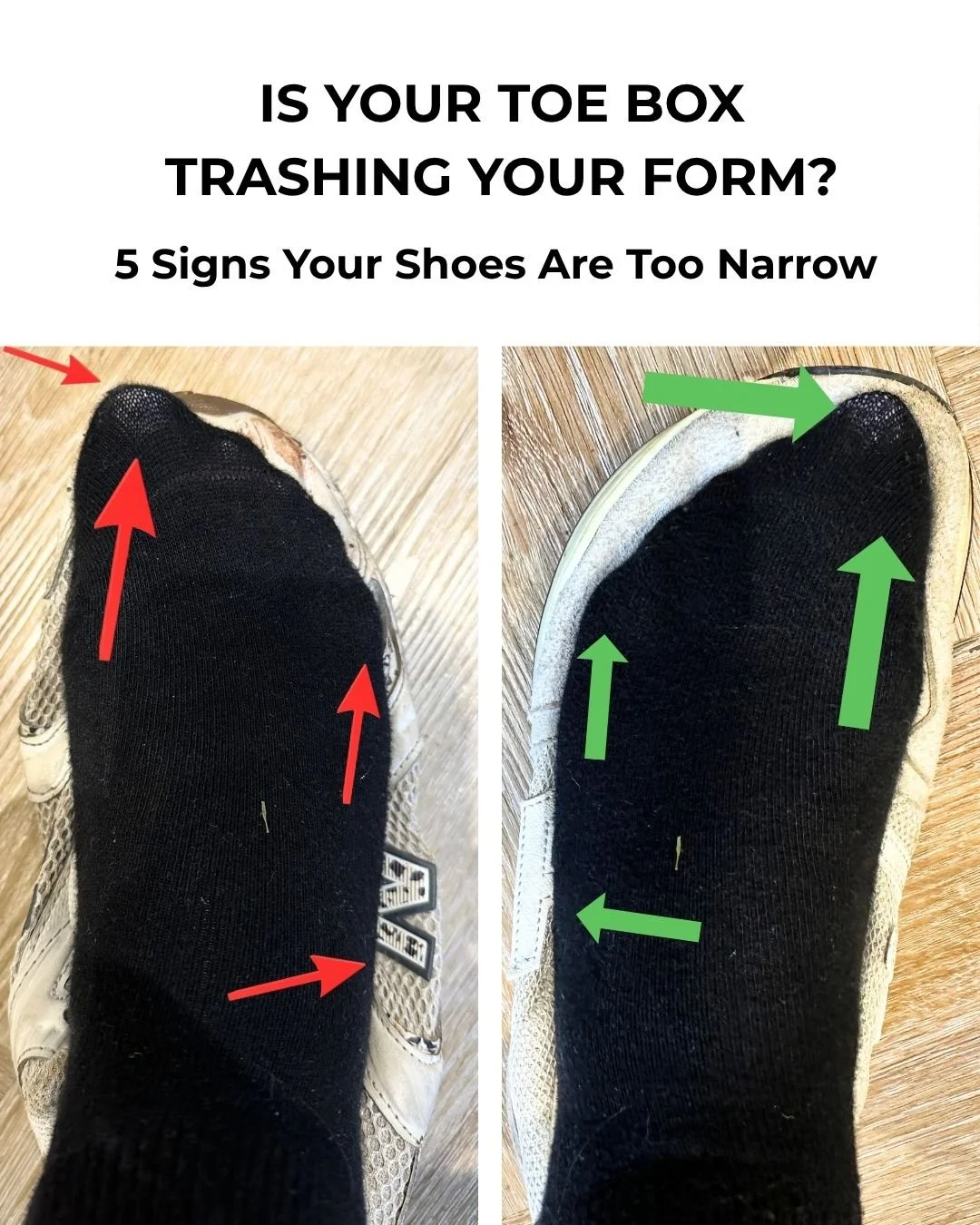
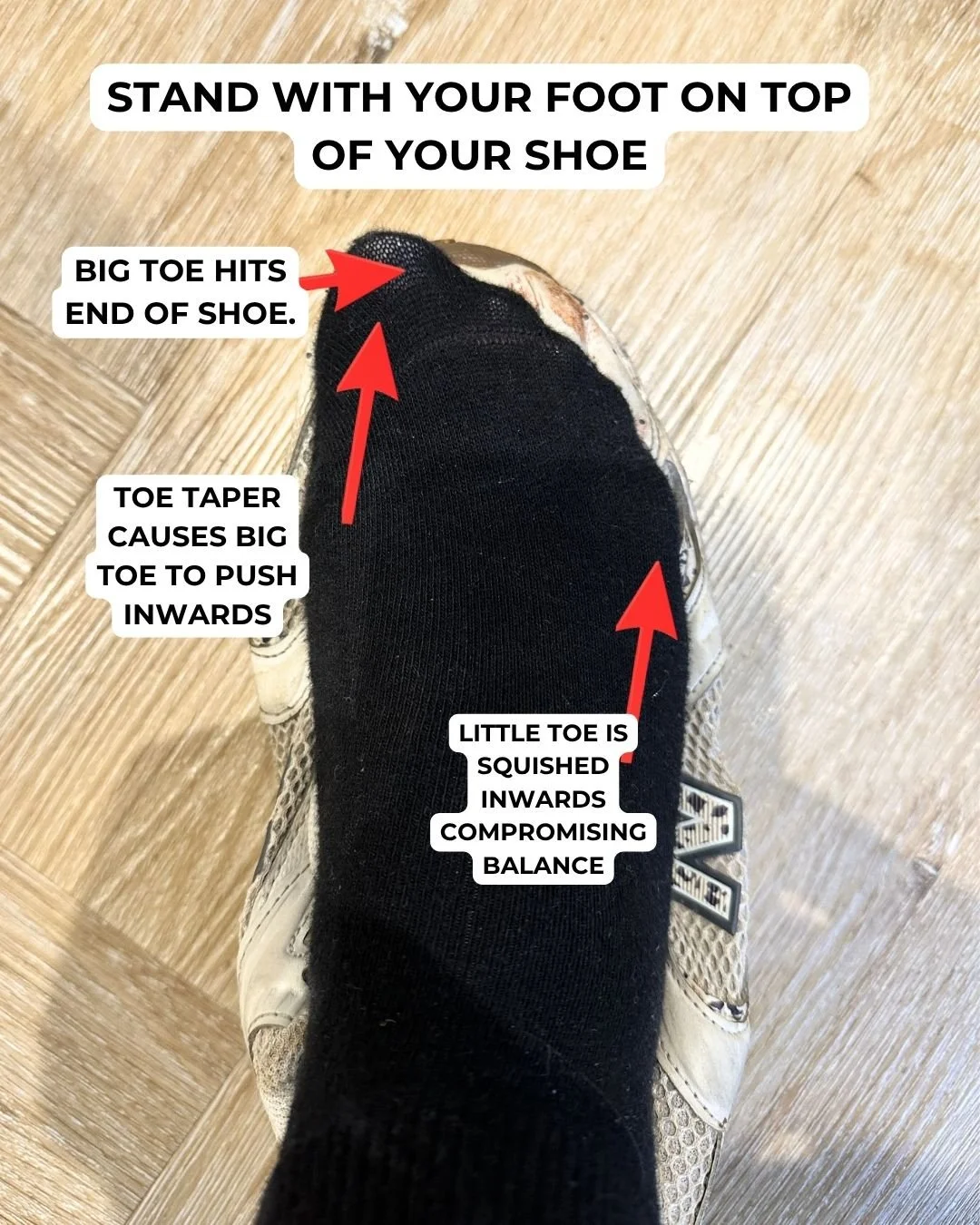
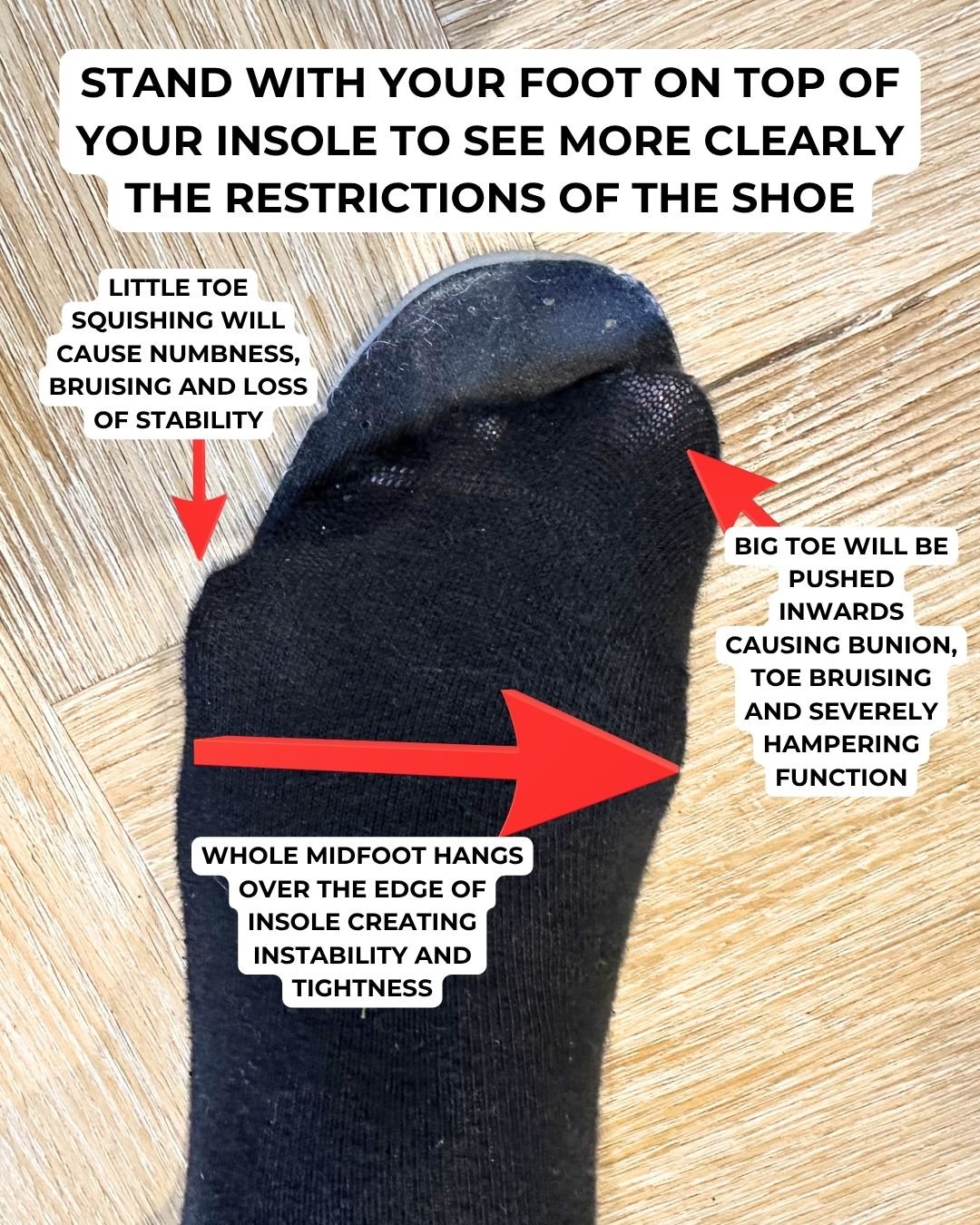
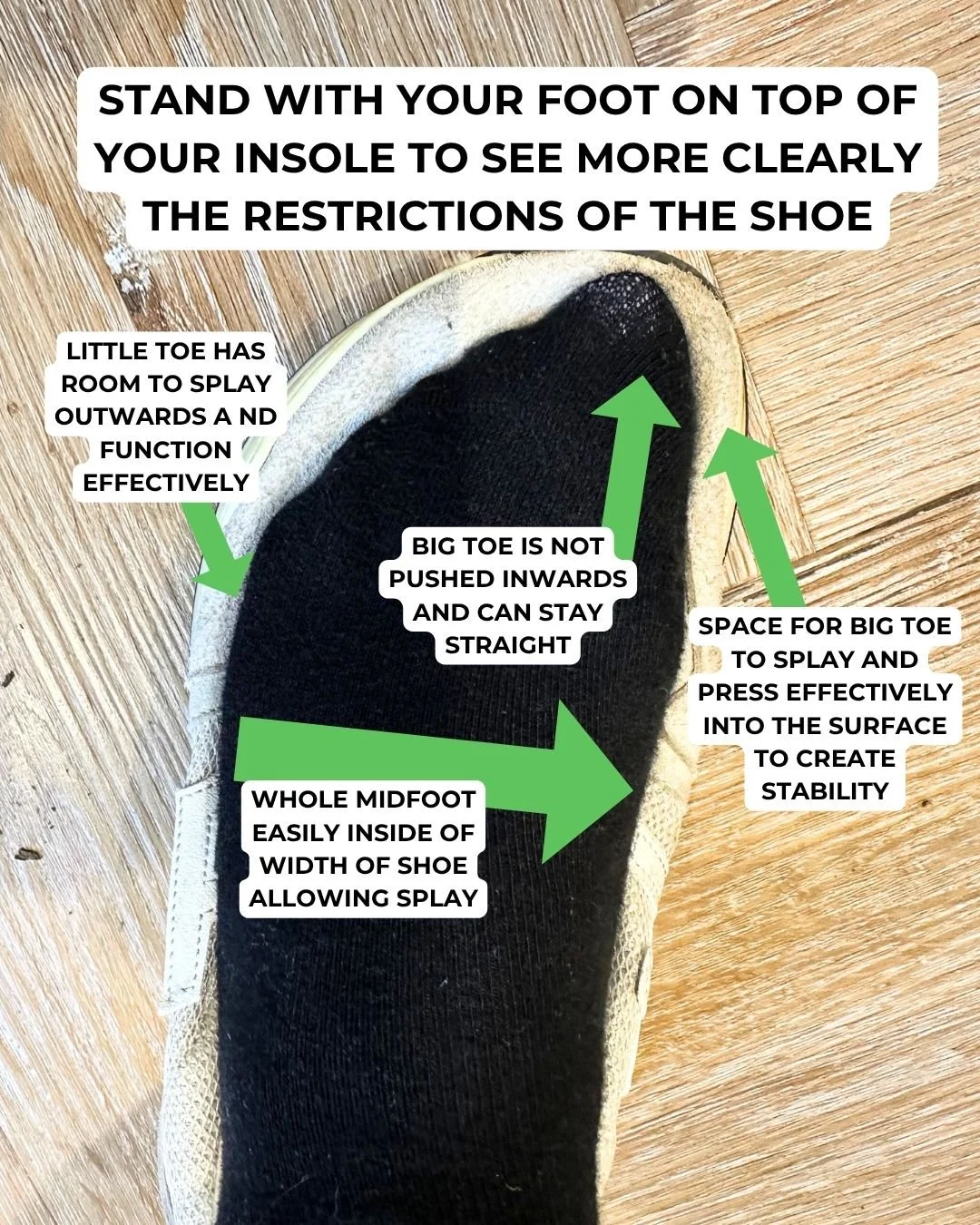
(SEE IMAGES BELOW OF HOW TO TAKE INSOLE TEST)
We spend so much time obsessing over foam, carbon plates, weight of the shoe, what colours they are and stack height but we’re ignoring the most important part of the shoe: the shape.
Most running shoes on the market are designed like a ‘V’ they are pointy at the front. This is called a toe taper. It creates the illusion of streamline speed. It also means the shoe companies use less materials over millions of pairs of shoes too, saving them profit along the way.
The problem with the ‘V’ shape is that our foot is designed like a ‘U’ which is wider at the toes. When you jam a ‘U’ into a ‘V’ something has to give.
Usually, it’s your big toe, and your little toe too!
If your big toe is being pushed inward (misalignment), it can’t push off the ground correctly. This hidden danger doesn’t just cause bunions, it travels up the whole chain of your body, causing knee pain, hip instability, and even lower back issues.
The first time I came across this idea of modern footwear inhibiting our feet was from a bio-mechanist called Katy Bowman. Katy has written several books around natural movement and taking a more holistic approach to our training.
I was suffering from knee and hip pain from running at the time. I did my usual Google searching around the topic of knee pain when running. I came across Katy Bowman’s work and the idea around modern footwear inhibiting the natural function of one of the body’s most incredibly freely moving and sensory areas.
The foot is one of the most sensory areas of the body behind the finger tips and the lips. There’s a reason the foot has so many nerve endings. Our body needs feedback from the ground to be able to predict and place the next foot to keep us upright and stable.
When we are moving at higher speeds (running) the foot sensing ability is even more important as there is less time between each foot hitting the ground. There are also greater impact forces to be able to predict and absorb. If the body gets this wrong it will ultimately lead to other areas of the body having to work and help the foot out. This will create muscles and tendons that have been overworked, which then leads to injury.
This is what had happened with me. My footwear was ill-fitted. The toe box was too narrow causing a bunion to the big toe. My little too was squished inwards compromising my balance and I had numbness and tingling from the midfoot of the shoe being too tight.
The shoe was the right size. I actually half sized up. It was the shape of the shoe that was causing the issues.
We’ve been told that black toenails and sore arches are just part of being a runner. They aren't. They are sirens from your feet telling you that your ‘foundations’ are being squished.
If you want to run stronger and longer, you have to stop treating your feet like an afterthought.
Here is how to tell if your shoes are sabotaging you and exactly how to fix it.
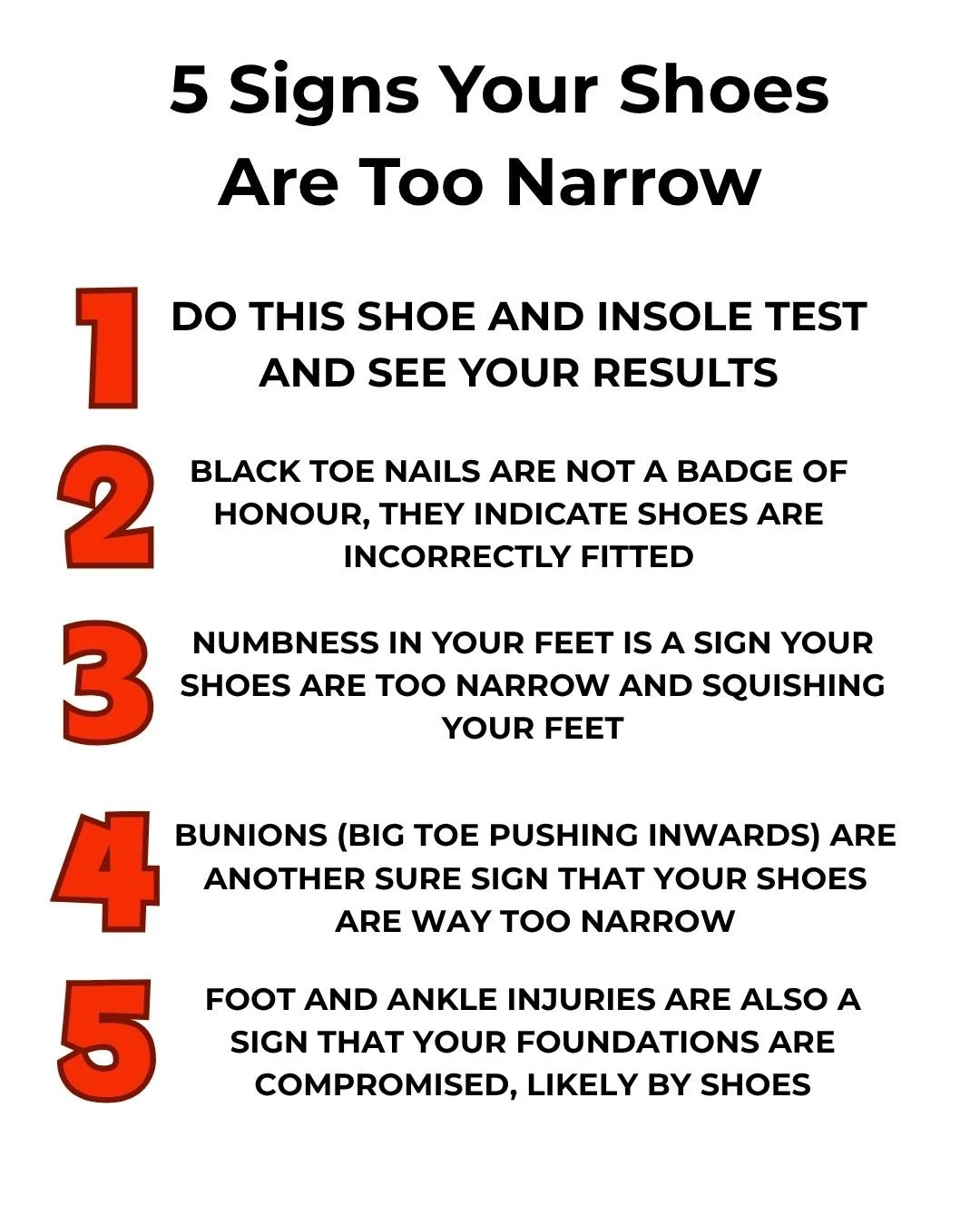
The 5 Warning Signs (Your Shoes are Too Narrow):
The Insole Test: Pull the insole out and stand on it. If your foot overflows the edges, you are running in a ‘foot prison’ (see images)
Black Toenails: This isn't a badge of honour, it’s a sign of constant micro-trauma from an incorrectly fitted shoe.
Foot Numbness: Pins and needles? That’s your shoe squishing your nerves and cutting off the ‘feedback data’ your brain needs.
The Bunion Check: If your big toe is being forced inwards, your shoes are literally re-shaping your skeleton and killing your power.
Recurring Injuries: Shin splints? Knee pain? If your foundation (the foot) is compromised, the rest of the ‘building’ will eventually crumble.
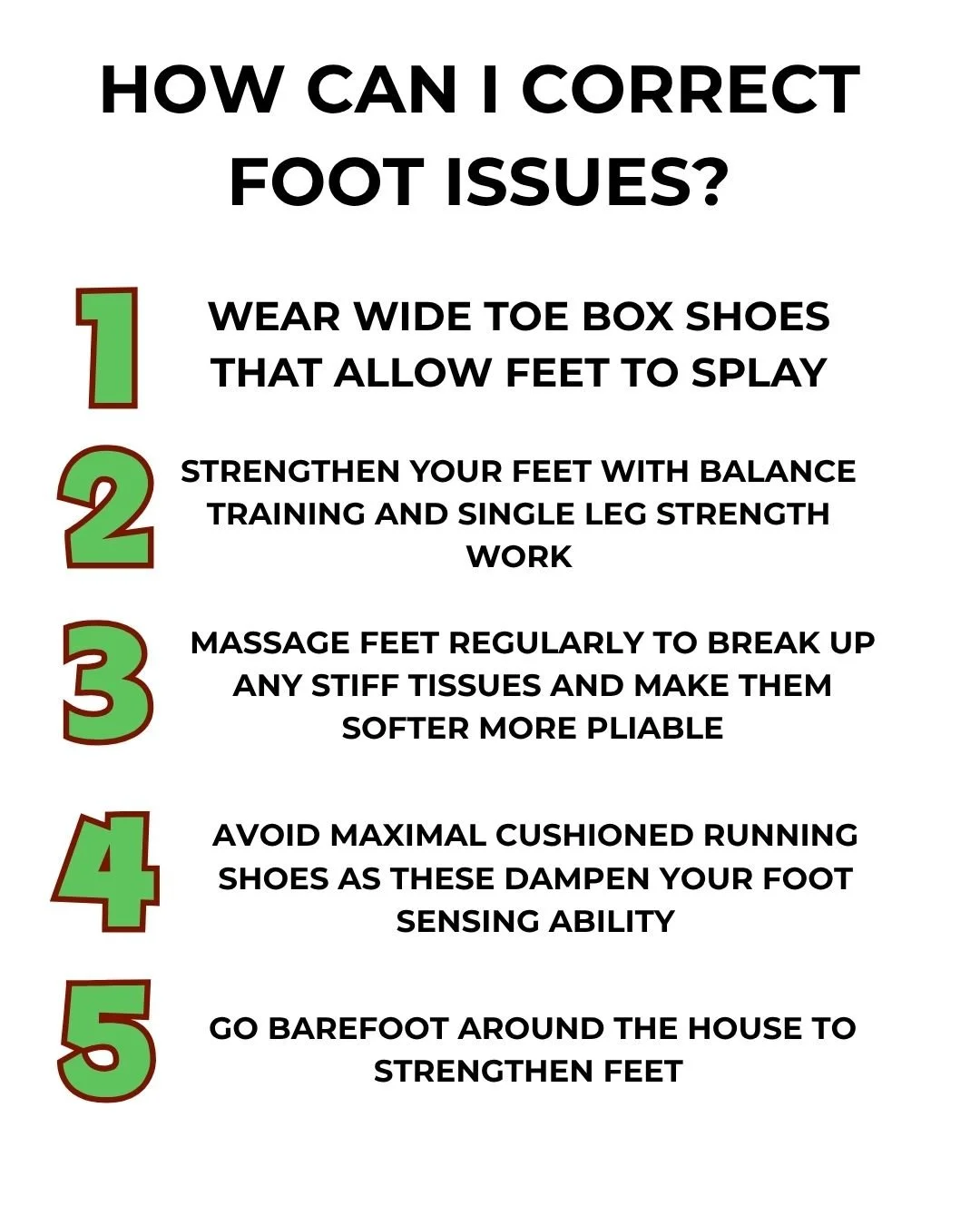
The 5-Step Foot Recovery Plan:
Go Wide: Switch to a Wide Toe Box shoe. Give your toes the room they need to splay and provide a stable base.
Find Your Balance: Incorporate single-leg strength work. Yoga balance sessions. Strong feet start with stability.
Soft Tissue Reset: Massage your feet regularly. Break up stiff tissues to make your feet softer and more pliable.
Feel the Ground: Avoid overly maximalist cushions. They dampen your foot’s ability to sense the ground, making you less efficient.
Barefoot Freedom: Ditch the shoes at home. Walking barefoot is the simplest way to strengthen your natural arch.
The Bottom Line: You can’t build a strong house on weak foundations. Our bodies are exactly the same, we can’t build a great run on a broken foundation. Check your insoles today with the simple test, then get to work on improving your foundations with the simple 5 step plan above. Your future, more stable self will thank you.